How Fortnite and Roblox Are Shaping Gaming Culture
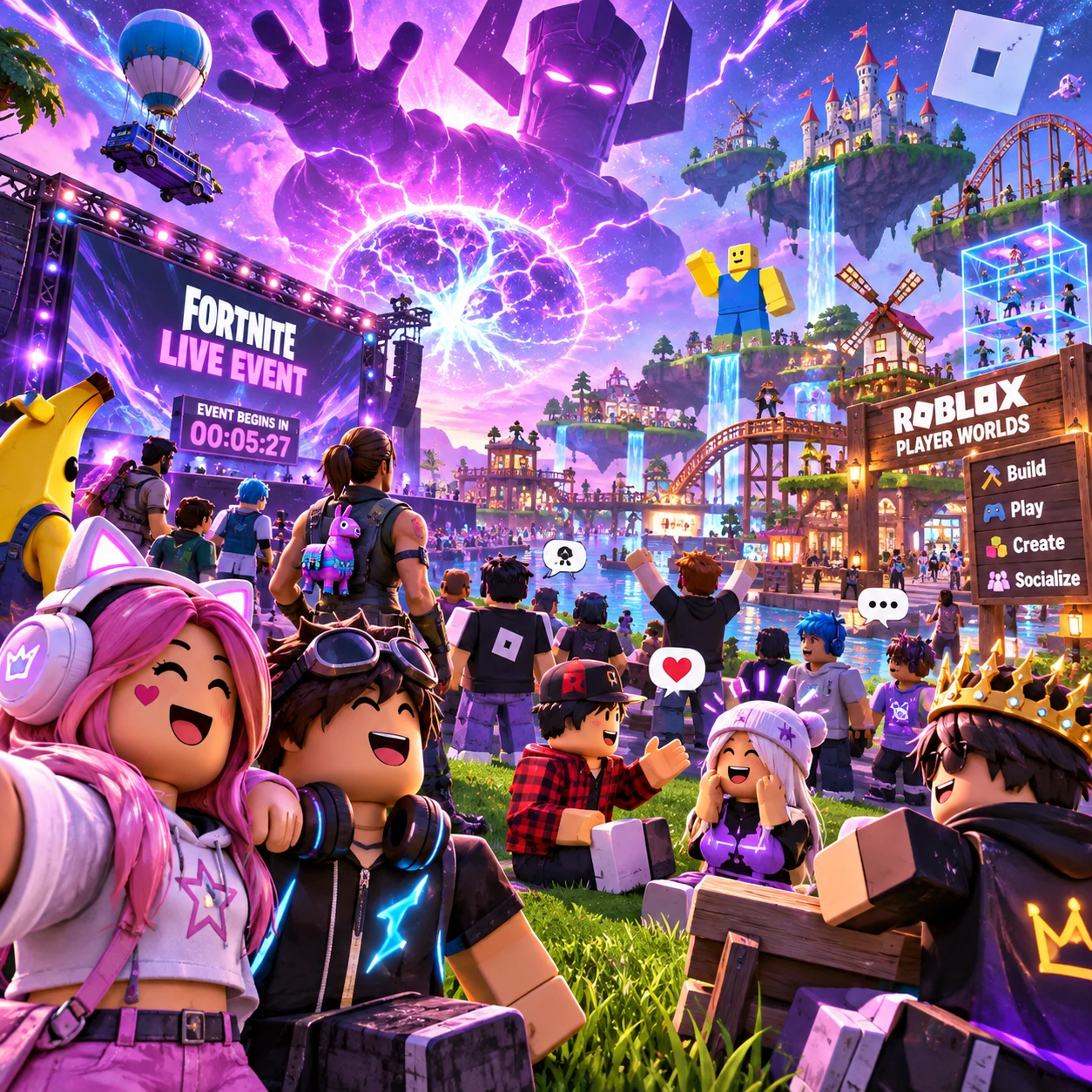
Massive online games have become places to meet, create, and share experiences as well as play. Fortnite and Roblox show two distinct ways this shift is changing gaming culture: one brings players into evolving, tightly designed experiences, while the other gives them tools to build worlds of their own.
From games to shared online spaces
Massive online games combine gameplay with social interaction, giving players a shared space to spend time with friends and join online communities. The game is the starting point; conversation, collaboration, and familiar routines often keep people coming back.
In Fortnite, friends can meet in a match, try a creative mode, or simply hang out between rounds. Roblox offers a broad range of experiences created by users, so a group might move from an obstacle course to a role-playing world without leaving the platform. In both cases, social gaming can make the destination as important as the activity.
These spaces differ from a conventional multiplayer match, where the main goal is usually to win or finish a level. Players may instead use voice or text chat, join a friend’s session, or return to a shared experience after school or work. That convenience helps online communities form around shared interests, inside jokes, and repeated play.
Still, a digital gathering space is shaped by its rules and design. Features, moderation, and access settings affect who can participate and how comfortable a session feels. The social benefits are real, but they depend partly on how players and platforms manage those spaces.
Two different models of player participation
Fortnite and Roblox invite participation in different ways: Fortnite regularly changes the experiences players can enter, while Roblox centers on a platform of player-created worlds. Their shared social features can look similar, but the source of each experience is different.
Fortnite is best known for its competitive modes, including battle royale, alongside creative and other experiences. Its developers shape the core game and can refresh it with new content, collaborations, and seasonal changes. Players participate by learning new maps and mechanics, choosing how to play, and responding to changes that give a familiar game a new feel.
Roblox works more like a collection of games and interactive spaces. Creators use Roblox Studio and platform tools to make experiences, while players browse and visit them. One world may focus on racing; another might invite players to role-play, solve puzzles, or build together. The range comes from many creators rather than one central design team.
This distinction affects the player’s role. In Fortnite, participation often means adapting to an experience designed and updated by the game’s creators. In Roblox, it can also mean becoming a maker, learning how an experience is built, or sharing one with an audience. Neither model is inherently better: curated updates offer a more consistent design, while user-led variety can be inventive but uneven in quality.
Creativity, identity, and user-generated content
Players express themselves through avatars, choices, and creations, while user-generated content lets them shape what others play. Fortnite and Roblox support this creativity in different ways, from personal style and custom spaces to fully designed interactive worlds.
An avatar can signal a player’s taste, mood, or sense of humor. Outfits, accessories, and emotes let players communicate without a long explanation, especially when they meet friends in a lobby or shared world. These choices are a form of self-expression, although some cosmetic options may be tied to paid purchases or limited-time availability.
Creative tools extend that expression beyond appearance. In Fortnite’s Creative experiences, players can explore or build activities that depart from the standard match. On Roblox, creators can design games, virtual hangouts, and other interactive spaces. Making an experience can involve planning rules, arranging environments, testing how players move through a world, and revising what does not work.
That process can teach practical skills, including design thinking, collaboration, and basic scripting. It also takes time, and making something popular is never guaranteed. A useful way to think about player creativity is as a ladder: players first choose an experience, then customize how they appear or play, and sometimes create something others can use. Not everyone wants to climb every rung, and each is a meaningful kind of participation.
Live events and moments players experience together
Live in-game events create shared cultural moments by letting players witness a scheduled experience at the same time. They can turn a game session into a collective occasion, though access, timing, and the event’s format affect who can join.
Fortnite has used live events and collaborations to bring players together for limited-time experiences. A concert, story event, or major change to the game world can prompt friends to log in, watch, react, and discuss what happened afterward. The shared timing matters: players are not only seeing the same content, but experiencing it alongside other people in the game.
These events also blur familiar boundaries between games and entertainment. Music, characters, and visual styles associated with wider popular culture can appear in a playable setting. That makes the game feel responsive to current interests, while giving players new reasons to return.
There are trade-offs. A one-time event can be exciting precisely because it is fleeting, but players who miss it may feel left out. Network access, time zones, device performance, and capacity can all influence participation. Event recordings and player-made clips help extend the moment beyond the game, though they cannot fully reproduce being there with a group.
Influence beyond the game
Fortnite and Roblox influence everyday entertainment and social habits by carrying game experiences into conversations, videos, and time spent with friends. Their cultural reach comes from how players share and reuse what happens, not only from the games themselves.
A funny match, a clever Roblox world, or an event reaction can become a clip that friends pass around. Players may discuss strategies, trade recommendations, or borrow phrases and jokes from experiences they share. This creates a loop: online communities help make moments meaningful, and those moments give the community more to talk about.
The two platforms contribute differently. Fortnite often connects gaming culture to changing seasons, competitive play, and high-profile collaborations. Roblox makes the variety of user-generated content visible, with trends that can grow around a particular experience or creator. In both cases, players are audiences and participants at once.
That influence is not uniform. A player’s experience depends on their interests, friends, age, and the content they encounter. Nor does every in-game trend move into wider culture. The more reliable point is that massive online games have become part of how some people socialize and choose entertainment, alongside messaging apps, videos, and traditional games.
Benefits and challenges of cultural influence
The cultural influence of social gaming can support creativity, friendship, and collaboration, but it also raises practical concerns about safety, moderation, spending, and screen time. A balanced approach helps players enjoy the benefits while setting boundaries that fit their needs.
Shared play can give friends a low-pressure way to spend time together, and collaborative building can encourage planning and problem-solving. For younger players especially, however, open communication and appropriate privacy settings matter. Parents and players can review who may contact an account, what content is accessible, and how reporting or blocking tools work.
Moderation is an ongoing challenge on any large platform. User-generated content and real-time chat offer variety and connection, but they can also expose players to unsuitable material or unwanted interactions. Platform controls help, yet no filter catches everything. Players should know how to leave a session, mute or block someone, and report behavior that violates the rules.
Time and spending deserve attention, too. Limited-time events and cosmetic items can create pressure to log in or buy something before it disappears. Agreeing on a play window, checking purchase settings, and pausing before spending can reduce that pressure without treating games as inherently harmful. The aim is to make play one part of a healthy routine, rather than letting platform prompts set the schedule.
Fortnite and Roblox show how gaming culture now includes more than competition or completion. Players gather, perform, build, and share; the result is a richer kind of entertainment, with responsibilities that come along with its social reach.