How Artificial Intelligence Is Revolutionizing NPC Behavior in Games
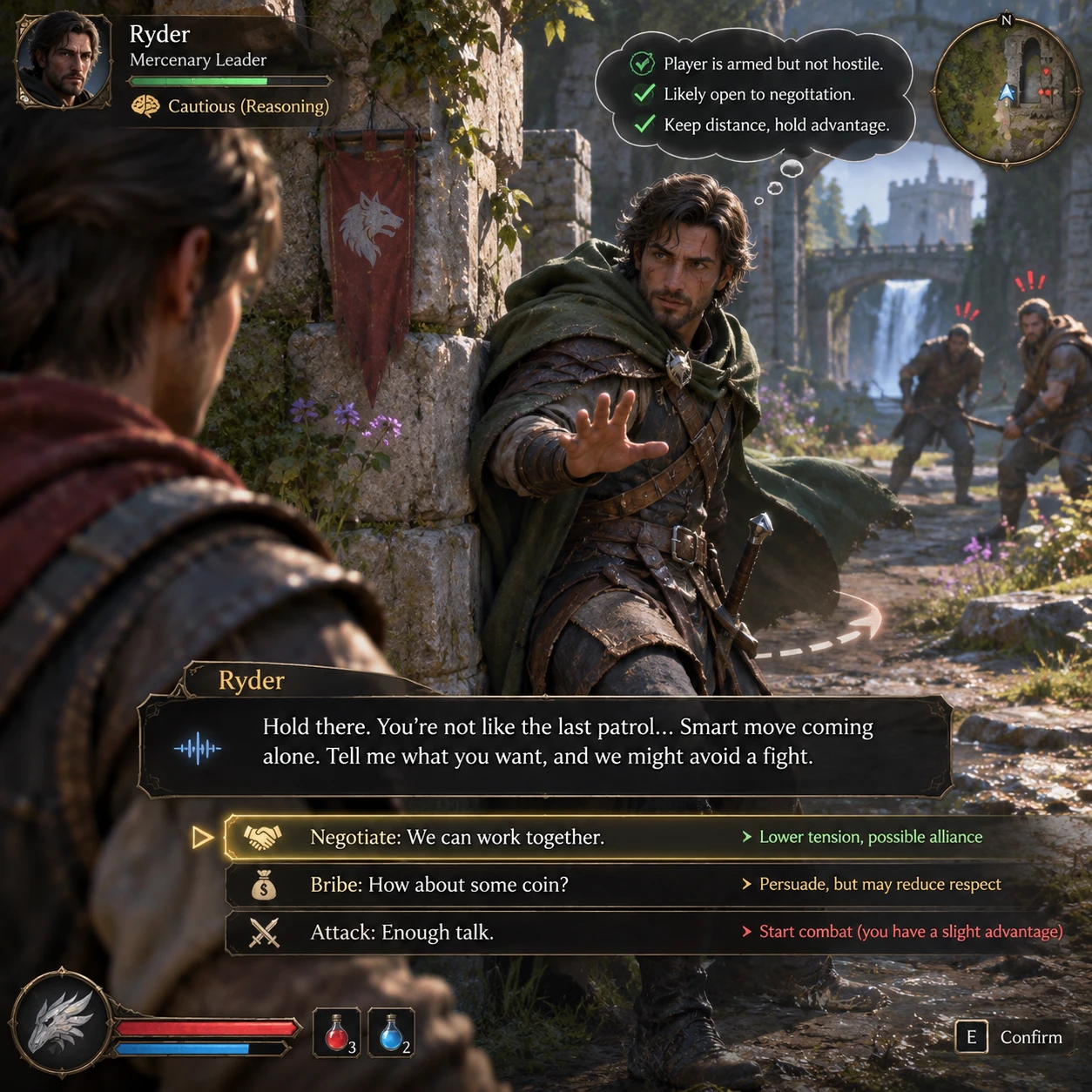
Non-player characters (NPCs) make game worlds feel inhabited. A guard who spots a disguise, a companion who responds to danger, or a shopkeeper who remembers a choice can turn a familiar quest into a personal experience. Artificial intelligence is changing how developers create these reactions, though “AI” in games covers several different techniques rather than one all-purpose technology.
Most NPCs still operate within rules designed by game developers. Newer systems can make those rules more flexible, helping characters respond to changing situations without promising human-level intelligence. The result depends on the game’s goals: a tightly scripted boss may serve the story better than an unpredictable one.
What Makes an NPC Seem Intelligent?
An NPC seems intelligent when its actions fit the situation and make sense to the player. That impression comes from timely reactions, readable motives, and behavior that supports immersion and gameplay.
In practice, an NPC does not need to think like a person. It needs to behave convincingly within the game’s world. A guard who hears a noise, investigates the likely source, and calls for help gives the player a clear chain of cause and effect. A character who spots the player but continues a routine without explanation feels less believable.
Good NPC behavior also communicates information. A companion who takes cover signals danger; a crowd that flees after an explosion helps establish urgency. These responses matter because players use them to understand both the game world and its rules. If an enemy can see through walls or react instantly to a hidden player, the character may seem powerful, but the encounter can feel unfair.
Believability is a design outcome, not a measure of raw computational power. Designers balance responsiveness, consistency, and clarity so that players can interpret what an NPC is doing. A useful test is whether the action feels reasonable, whether the player can understand why it happened, and whether it creates an interesting choice.
From Scripts to Adaptive Behavior
Traditional NPCs follow designer-authored rules, while adaptive systems can adjust their choices based on changing conditions or player actions. Behavior trees and finite-state machines remain widely useful because they make those rules structured and controllable.
A finite-state machine puts an NPC into one of a limited set of states, such as patrolling, investigating, chasing, or searching. Events trigger transitions between them. This approach is predictable and efficient, but a large state list can become difficult to manage as designers add exceptions.
Behavior trees organize actions into branches of conditions and priorities. An enemy might first check whether it is in danger, then whether it can attack, and otherwise continue patrolling. Developers can build complex behavior from smaller pieces and adjust priorities without rewriting an entire character system.
These methods are not obsolete. They are often the best choice for scenes that require precise timing or reliable results. More adaptive approaches can add variation: an NPC might choose among several tactics, respond to a player’s repeated strategy, or use machine learning to select actions. But learning systems need boundaries, testing, and clear design objectives. A character that changes tactics unpredictably may be less fun than one with a small, understandable set of responses.
The practical shift is from a single fixed sequence toward controlled adaptation. The game can let an NPC respond to the player while keeping its possible actions within a designed range.
How AI Changes NPCs in Practice
AI changes NPC behavior most visibly through movement, combat choices, reactions to the environment, and dialogue. In many games, these results come from a mix of traditional rules and newer systems rather than one technique working alone.
Movement and pathfinding
Pathfinding helps an NPC navigate from one location to another while avoiding obstacles. A character may choose a route around a wall, follow a moving target, or find a way to reach cover. Better navigation makes crowds and companions feel less mechanical, although complex terrain and many moving characters can raise processing costs. Movement also needs animation and collision rules that keep the route looking plausible.
Combat and decisions
In combat, an enemy can check distance, health, line of sight, and nearby allies before acting. One opponent might suppress the player while another looks for a flank. These decisions can make an encounter feel varied, but fairness still matters. Clear wind-up animations, reasonable reaction times, and consistent detection rules give players a chance to respond.
NPCs can also react to the game world outside combat. A witness might alert guards, a civilian might leave a dangerous area, or a companion might comment on a major event. Such responses connect the character’s behavior to what the player has done instead of making the world feel like a set of disconnected scenes.
Dialogue and social reactions
Procedural dialogue can assemble lines from authored fragments or select responses based on context, character traits, and past events. That can create more variation than repeating the same sentence, but the writing still needs to fit the character and the game’s tone. Generative AI may produce dialogue dynamically, though it is not a standard feature across games and requires safeguards against inconsistent or unsuitable output.
What Players Gain from Smarter NPCs
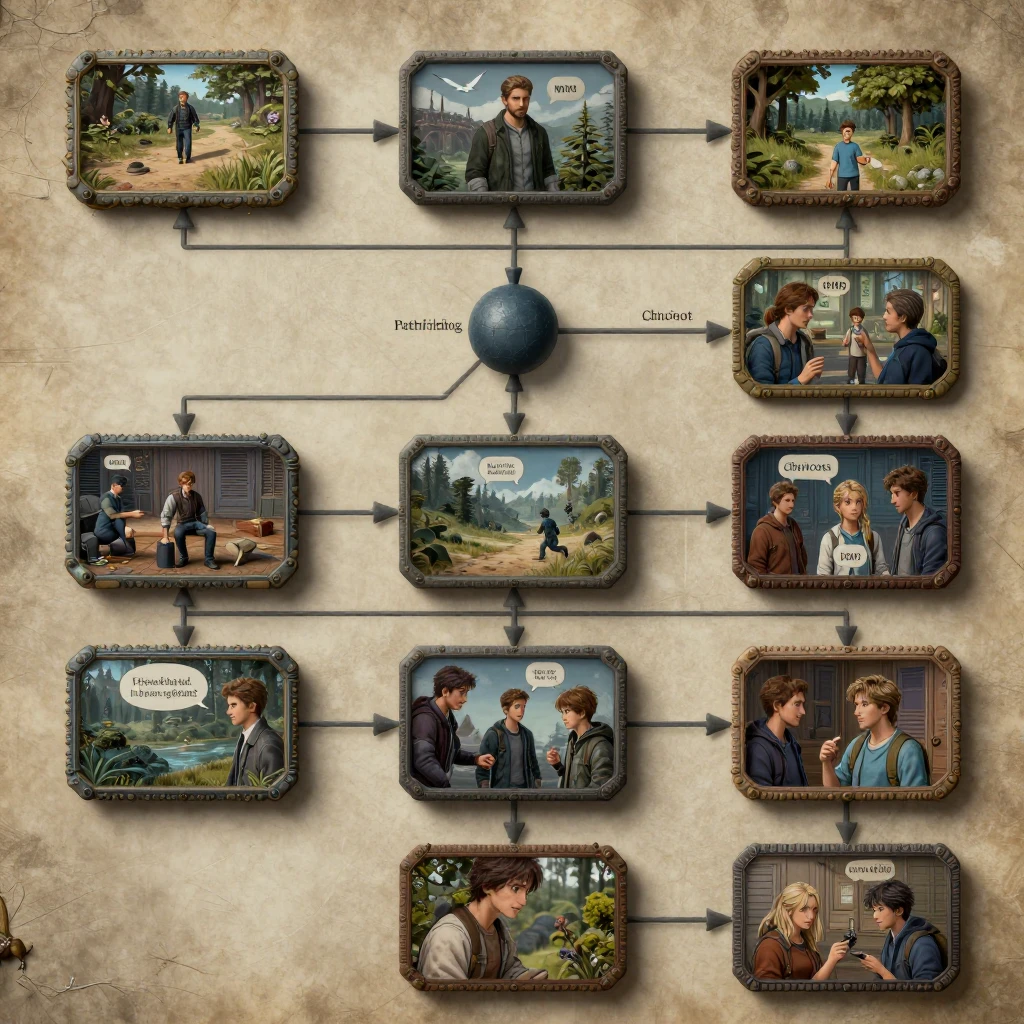
Smarter NPCs can make encounters less repetitive, strengthen immersion, and give players more ways to approach a challenge. Their value comes from how well they support meaningful choices, not simply from having more possible responses.
A guard who investigates a distraction can give a stealth player several options: wait, sneak past, create a second diversion, or take a risk. An enemy that changes position after the player repeatedly uses the same cover can encourage experimentation. These reactions create a stronger sense of player agency because actions appear to shape what happens next.
Responsive companions can also improve pacing. If a partner moves to cover and warns about a threat, the player gains useful information without stopping to open a menu. In a role-playing game, context-aware dialogue may make a friendship, rivalry, or earlier decision feel more present.
There is a trade-off: more variation can make outcomes harder to predict. Players often enjoy surprise, but they also need to learn how a game works. The strongest designs pair flexible behavior with readable signals, so players can make informed decisions even when they cannot predict every result.
The Limits and Trade-Offs of AI-Driven NPCs
AI-driven NPCs can react in richer ways, but they also bring challenges in consistency, performance, testing, and designer control. More complex behavior does not automatically create a better game.
Predictability and fairness: An NPC that adapts too quickly can feel as if it is cheating, especially if it seems to know the player’s position without a believable source of information. Designers need to define what the character can perceive and how quickly it can respond.
Consistency and storytelling: A flexible NPC might act in a way that conflicts with a planned scene or established personality. A story-critical character may need to reach a particular place at a particular time, which limits how much freedom the system can allow.
Development and performance: Each additional behavior creates more cases to test. Navigation, perception, dialogue, and combat choices can interact in unexpected ways, while many active NPCs may compete for processing resources. Developers often use simpler behavior at a distance or for background characters to keep performance stable.
Designer control: Machine learning and generative AI can produce behavior that is difficult to predict in advance. That makes them challenging to test and can create content that clashes with a game’s tone or rules. A common mistake is adding adaptive technology before defining the player experience it should improve. The fix is to start with a specific goal, such as making stealth encounters less repetitive, then compare the new system with a simpler scripted solution.
For many games, a carefully authored behavior tree is easier to tune and more reliable than a learning model. The right choice depends on the desired experience, development budget, platform limits, and how much unpredictability the design can support.
What the Future May Hold
The future of NPCs may include more context-aware dialogue and more responsive behavior, but machine learning and generative AI remain tools with limits rather than guarantees of better characters. Their use will depend on testing, performance, creative control, and player expectations.
Machine learning could help an NPC choose among tactics based on a player’s patterns, while keeping its actions inside rules set by designers. Generative AI could support procedural dialogue that reflects a recent event or a character’s role. In both cases, developers must consider response quality, moderation, latency, cost, and whether the result can be reproduced during testing.
Established techniques will remain important. Finite-state machines, behavior trees, pathfinding, and authored dialogue offer clear control and dependable performance. A likely direction is a hybrid: authored systems handle essential gameplay and story beats, while adaptive components add limited variation where it benefits the player.
For players, the meaningful question is not whether an NPC uses the newest AI technique. It is whether the character reacts in a way that feels understandable, fair, and connected to the player’s choices. When technology serves those goals, NPC behavior can make a game world feel more responsive without taking control away from its designers.
Frequently Asked Questions
How does AI control NPC behavior?
AI controls NPC behavior by evaluating conditions such as sight, distance, danger, and player actions, then selecting an allowed response. Many games use rule-based systems such as behavior trees or finite-state machines.
Are AI-driven NPCs better than scripted NPCs?
Not always. Scripted NPCs are reliable and easy to shape around a story, while adaptive NPCs can create more varied reactions. The better choice depends on whether the game needs precise control or flexible responses.
Can NPCs learn from a player’s actions?
Some systems can adjust to repeated player behavior, but learning is not a standard feature in every game. Developers may also simulate adaptation with authored rules, such as having enemies respond to a tactic the player uses often.
Does generative AI create NPC dialogue in real time?
It can be used to generate dialogue in real time, but this is an emerging approach, not a common feature across games. Developers must manage tone, accuracy, safety, performance, and consistency with the story.